



 My Page(会員専用)
 サイトマップ
Tokyo Women’s Medical University
 >
>- 学術調査・研究>
- 留学助成-
- Research Environment in Japan-
- Tokyo Women’s Medical University
Tokyo Women’s Medical University
Research Overview and Environment
About the Institution
- Institution Name
Division of Diabetology and Metabolism, Department of Internal Medicine, Tokyo Women’s Medical University - Location (City, Country)
Shinjuku-ku, Tokyo, Japan - Institutional Overview
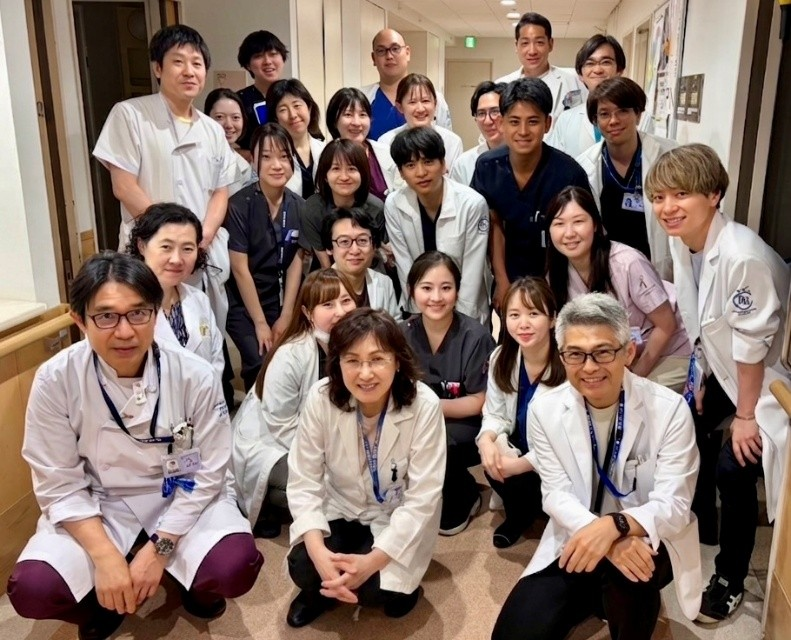
Our division traces its roots to the Diabetes Center of Tokyo Women’s Medical University, established in 1975 as the first dedicated diabetes center in Japan. Since its founding, the center has provided comprehensive care for patients with all types of diabetes and has grown into one of the largest diabetes care centers in the country. Building on this long-standing clinical tradition, the current Division of Diabetology and Metabolism provides advanced patient care and conducts leading clinical and translational research not only in diabetes, but also in obesity, hypoglycemia, and dyslipidemia. Through an integrated approach that combines specialized expertise, multidisciplinary collaboration, and access to a large and diverse patient population, our division offers an outstanding environment for both high-quality clinical practice and impactful research in metabolic diseases. - Key Points for International Researchers
Our division has a long-standing tradition of international academic exchange and research training. Over the years, we have sent researchers abroad to leading European institutions, including the Steno Diabetes Center in Denmark and the University of Exeter in the United Kingdom. In addition, Prof. Mototsugu Nagao, Division Chair, maintains an active academic affiliation with the Unit of Islet Cell Exocytosis at the Lund University Diabetes Centre in Sweden and is engaged in ongoing collaboration with European academia. We also host medical students from Lund University regularly, further strengthening our international educational and research ties. These connections provide a strong and reliable network that enables visiting researchers from Europe to continue collaborative research with confidence even after they return to their home institutions.
Research Environment
- Main Research Areas & Focus Fields
Our main research areas include islet cell physiology, diabetes pathology, genomic analysis of diabetes, and the development of novel diagnostic approaches for identifying the causes of hypoglycemia. - Research Team Structure
Our research program is led by the Division Chair, with each research unit headed by a principal investigator at the professor or associate professor level. This structure supports the close integration of clinical and basic research. Each unit includes physicians, graduate students, and residents, with additional support from research staff who facilitate basic research activities. Through regular meetings with the Division Chair and the principal investigators, researchers can share their plans and progress, receive mentorship, and further develop their work in a collaborative environment. - Collaboration with Clinical Departments or Hospitals
As a research division affiliated with the Department of Diabetology and Metabolism at Tokyo Women’s Medical University Hospital, we offer an environment well suited for translational research that bridges clinical practice and basic science. In addition to translational projects, researchers also have opportunities to engage in clinical studies using existing databases, enabling efficient and meaningful investigation based on real-world clinical data. - Major Research Facilities / Infrastructure
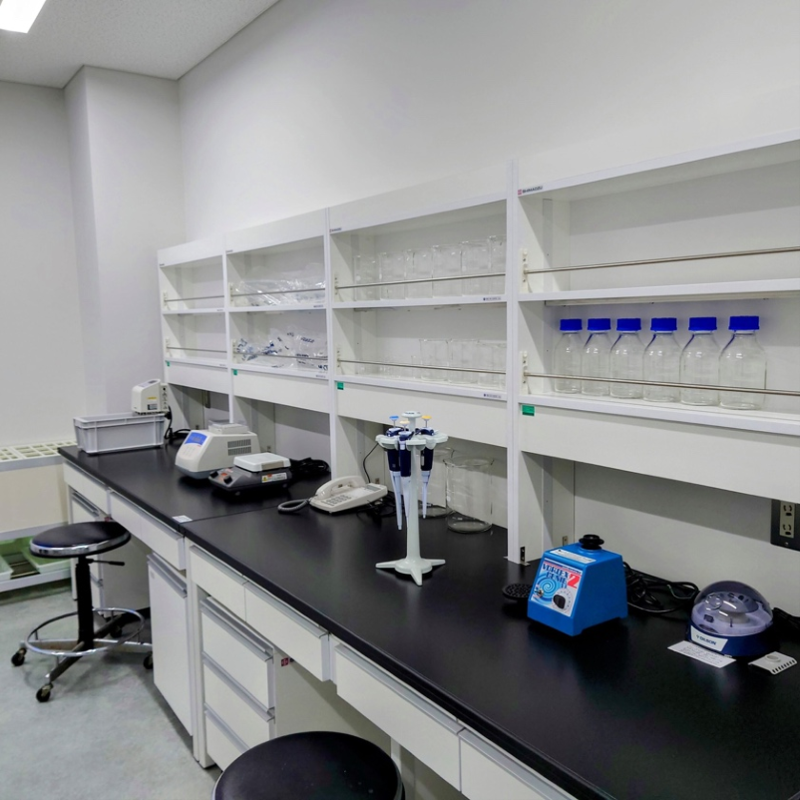
We have a wet laboratory equipped for basic experimental research, providing an environment where a wide range of laboratory-based studies can be conducted. In addition, researchers can make use of affiliated research facilities and animal experimentation facilities at Tokyo Women’s Medical University, enabling the pursuit of advanced basic and translational research. - Research Environment in English
The Division Chair and principal investigators have research experience in both Europe and the United States, and our division provides an environment in which research can be conducted smoothly in English. International researchers can communicate with supervisors and colleagues in English without difficulty, enabling them to participate fully in research discussions, project planning, and academic collaboration. - Recent Representative Publications or Achievements
- Cowan E, Karagiannopoulos A, Pollastri A, Asai A, Nagao M, Maziarz M, Esguerra JLS, Eliasson L. Network-based insights into miRNA regulation of β-cell insulin secretion in type 2 diabetes. iScience 28 (12): 114200, 2025.
- Okazaki-Hada M, Nagao M (Equal contribution), Asai A, Okada-Iwabu M, Hizuka N, Eliasson L, Sugihara H, Fukuda I, Iwabu M. Potential utility of circulating microRNA-483 as a biomarker for IGF-II-associated non-islet cell tumor hypoglycemia. J Clin Endocrinol Metab 110 (9): e3063-e3069, 2025.
- Ofori JK, Karagiannopoulos A, Nagao M, Westholm E, Ramadan S, Wendt A, Esguerra JL, Eliasson L. Human islet microRNA-200c is elevated in type 2 diabetes and targets the transcription factor ETV5 to reduce insulin secretion. Diabetes 71 (2): 275-284, 2022.
- Nagao M, Fukuda I, Asai A, Esguerra JL, Hizuka N, Eliasson L, Sugihara H. Diagnostic potential of miR-483 family for IGF-II producing non-islet cell tumor hypoglycemia. Eur J Endocrinol 184 (1): 41-49, 2021.
- Asai A, Nagao M (Equal contribution), Hayakawa K, Miyazawa T, Sugihara H, Oikawa S. Leptin production capacity determines food intake and susceptibility to obesity-induced diabetes in Oikawa-Nagao Diabetes-Prone and Diabetes-Resistant mice. Diabetologia 63 (9): 1836–1846, 2020.
- Nagao M, Esguerra JL, Asai A, Ofori J, Edlund A, Wendet A, Sugihara H, Wollheim CB, Oikawa S, Eliasson L. Potential protection against type 2 diabetes in obesity through lower CD36 expression and improved exocytosis in β-cells. Diabetes 69 (6): 1193-1205, 2020.
Voices from the Lab:Daily Life, Culture, and Support
Respondent:
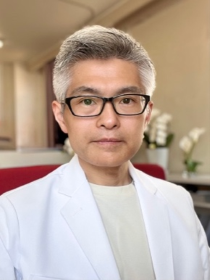
Mototsugu Nagao, MD, PhD
Professor and Chair, Division of Diabetology and Metabolism,
Department of Internal Medicine, Tokyo Women’s Medical University
Mototsugu Nagao, MD, PhD
Professor and Chair, Division of Diabetology and Metabolism,
Department of Internal Medicine, Tokyo Women’s Medical University
Q1. Please describe a typical day for an international researcher (examples are welcome).
In the morning, researchers usually begin the day by reviewing the schedule in the department office. After that, they spend the rest of the morning in the laboratory conducting experiments. At lunchtime, we often have a lunch meeting in the department, which also provides a good opportunity to interact with residents and other colleagues. In the afternoon, researchers typically continue their experiments or work on data organization and manuscript preparation. Around 3:00 p.m., we sometimes hold a small meeting combined with FIKA, creating a relaxed setting for discussion. The day usually ends around 5:00 p.m., allowing time for a well-balanced daily routine.
Q2. How would you describe the atmosphere of the laboratory or workplace?
Our department has a bright and energetic atmosphere, with many young staff members and residents contributing to an active and welcoming environment. Although the department includes around 30 members, one of its distinctive features is that each person is assigned their own desk, which helps create a comfortable and well-organized workspace. Of course, a dedicated desk will also be prepared for you, so you can begin your research and daily work smoothly from the start.
Q3. What support or considerations are provided regarding language and cultural differences?
Including the professor’s office, the doors to the staff rooms are always open, and researchers can feel free to ask questions or seek advice whenever needed. We also frequently hold online meetings with overseas laboratories and discussions with international pharmaceutical companies, so open communication in English is part of our daily routine. This environment helps international researchers participate naturally in academic and professional discussions while feeling supported both linguistically and culturally.
Q4. Is there a dedicated office or contact point for international researchers?
International researchers can receive support from the staff of the International Exchange Support Office at Tokyo Women’s Medical University.
Q5. What aspects of daily life in Japan may help international researchers feel comfortable and secure?
Although our university is located in Shinjuku, one of the world’s leading metropolitan areas, the immediate surroundings of the campus offer a comfortable and supportive environment for daily life. Tokyo Women’s Medical University is the only women’s medical university in the world, and both the School of Medicine and the School of Nursing are composed entirely of female students. One of the university’s founding principles is to foster women healthcare professionals who contribute to society, and it actively welcomes women researchers. This distinctive academic culture may provide an especially reassuring and supportive environment for international researchers, particularly women.
Q6. What message would you like to share with colleagues who are thinking about coming to Japan for research?
I was awarded the EFSD–JDS reciprocal travel research fellowship in 2016 and spent three and a half years conducting research in Sweden. Since returning to Japan, I have been working to build a laboratory environment that reflects the openness, collaboration, and academic culture I experienced there. In pursuing that goal, ethnic and gender diversity are essential. I would be delighted to welcome you to join us and help build this international research community together.
更新:2026年7月2日