



 My Page(会員専用)
 サイトマップ
Juntendo University Graduate School of Medicine
 >
>- 学術調査・研究>
- 留学助成-
- Research Environment in Japan-
- Juntendo University Graduate School of Medicine
Juntendo University Graduate School of Medicine
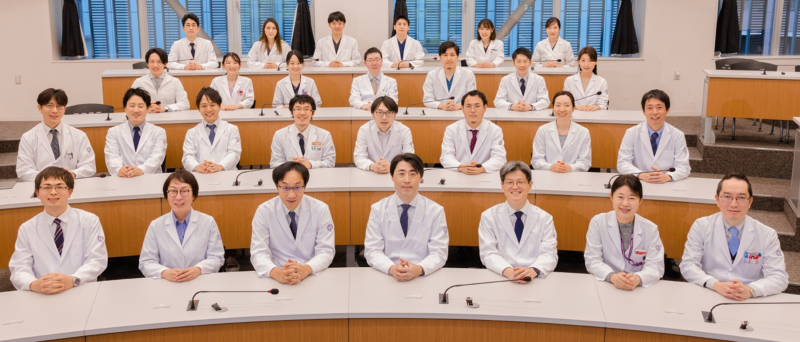
Research Overview and Environment
About the Institution
- Institution Name
Department of Metabolism and Endocrinology, Graduate School of Medicine, Juntendo University - Location (City, Country)
Bunkyo-ku, Tokyo, Japan - Institutional Overview
The Department of Metabolism and Endocrinology at the Graduate School of Medicine, Juntendo University is a leading academic unit dedicated to research and education in metabolic and endocrine diseases. As part of a comprehensive graduate medical school, the department conducts basic, clinical, and translational research in a well-balanced and integrated manner, aiming to bridge fundamental discoveries with clinical practice. Our primary research interests include basic studies on pancreatic β-cell biology, investigations into the pathophysiology of type 2 diabetes, and cohort-based clinical research in type 1 diabetes. Through a combination of experimental approaches using cellular and animal models and patient-oriented clinical studies, we seek to elucidate the mechanisms underlying diabetes onset, progression, and treatment response. The department is closely affiliated with Juntendo University Hospital, enabling seamless collaboration between researchers and clinicians. Patient-derived samples, including blood samples and muscle biopsy specimens, are utilized under appropriate ethical approvals. In addition, we actively participate in large-scale, multi-institutional clinical data initiatives such as J-DREAMS, alongside our own independent cohort studies of type 1 diabetes. International collaboration is a key component of our research strategy. We actively welcome international graduate students, postdoctoral fellows, and visiting researchers, and have a strong track record of sending postdoctoral researchers to leading overseas institutions, including the University of California, San Francisco (UCSF). Our laboratory culture emphasizes close mentorship and a philosophy of conducting research that is both rigorous and bold, addressing important scientific questions with methodological solidity. - Key Points for International Researchers
- Integrated basic, clinical, and translational research environment
- Direct collaboration with a university hospital and access to clinical resources
- Strong focus on pancreatic β-cell research with international exposure
- Supportive, mentorship-driven laboratory culture
- Research philosophy combining rigor and bold scientific inquiry
Research Environment
- Main Research Areas & Focus Fields
Our basic research focuses on elucidating the mechanisms of protein homeostasis in pancreatic β-cells and their roles in the pathophysiology of type 2 diabetes. While type 2 diabetes is the primary focus, the scope has expanded to include type 1 diabetes. Experimental approaches include genetically engineered animal models and pancreatic β-cell lines, with collaborative research conducted alongside the Autophagy Research Center at Juntendo University.
- Research Team Structure
The faculty includes two Professors and seven Associate Professors, with approximately ten graduate students. The team is primarily composed of clinician-scientists, and international researchers are regularly hosted. - Collaboration with Clinical Departments or Hospitals
The department is located on the same campus as Juntendo University Hospital. Collaborative research includes the use of pancreatic surgical specimens and cohort studies involving patients attending diabetes outpatient clinics. - Major Research Facilities / Infrastructure
Facilities include an animal research center capable of supporting genetically engineered mouse models, in-laboratory cell and molecular biology capabilities, advanced imaging such as electron and super-resolution microscopy, and access to mass spectrometry through the Autophagy Research Center. - Research Environment in English
Scientific discussions, meetings, mentoring, manuscripts, and presentations are conducted in English. Japanese language proficiency is not required to conduct research, although it may enhance daily communication. - Recent Representative Publications or Achievements
- Ebato C, Uchida T, Arakawa M, et al. Autophagy Is Important in Islet Homeostasis and Compensatory Increase of Beta Cell Mass in Response to High-Fat Diet. Cell Metab 2008;8:325–32.
- Shigihara N, Fukunaka A, Hara A, et al. Human IAPP–induced pancreatic β cell toxicity and its regulation by autophagy. J Clin Invest 2014;124:3634–44.
- Miura M, Miyatsuka T, Katahira T, et al. Suppression of STAT3 signaling promotes cellular reprogramming into insulin-producing cells induced by defined transcription factors. Ebiomedicine 2018;36:358–66.
- Aoyama S, Nishida Y, Uzawa H, et al. Monitoring autophagic flux in vivo revealed its physiological response and significance of heterogeneity in pancreatic beta cells. Cell Chem Biol 2023;30:658-671.e4.
- Ueki K, Nishida Y, Aoyama S, et al. Establishment of Pancreatic β-Cell–Specific Gene Knockout System Based on CRISPR-Cas9 Technology With AAV8-Mediated gRNA Delivery. Diabetes 2023;72:1609–20.
Voices from the Lab:Daily Life, Culture, and Support
Respondent:
Yuya Nishida, MD, PhD
Department of Metabolism and Endocrinology
Graduate School of Medicine, Juntendo University
Yuya Nishida, MD, PhD
Department of Metabolism and Endocrinology
Graduate School of Medicine, Juntendo University
Q1. Please describe a typical day for an international researcher (examples are welcome).
A typical day begins with laboratory work such as experiments using cell lines or animal models, data analysis, or preparation of figures and manuscripts. Researchers often have informal discussions with colleagues during the day, and scheduled laboratory meetings or mentoring sessions are held regularly. Clinical seminars or joint meetings with clinicians are also available, allowing researchers to gain insight into the clinical aspects of diabetes research. The working style is flexible, with an emphasis on productivity and scientific discussion rather than rigid schedules.
Q2. How would you describe the atmosphere of the laboratory or workplace?
The atmosphere of the laboratory is open, collaborative, and discussion-oriented. Young researchers play a central role in driving research projects, and faculty members are closely involved in daily scientific discussions. The environment encourages asking questions, exchanging ideas, and constructive feedback, creating a supportive yet intellectually stimulating workplace.
Q3. What support or considerations are provided regarding language and cultural differences?
English is commonly used in scientific discussions, laboratory meetings, and mentoring sessions when international researchers are present. Manuscripts and presentations are prepared in English, ensuring that international members can fully participate in research activities. Faculty members and colleagues are attentive to cultural differences and aim to create an inclusive environment where international researchers feel comfortable communicating and sharing ideas.
Q4. Is there a dedicated office or contact point for international researchers?
Juntendo University provides institutional support for international researchers through administrative offices that assist with visas, housing, and daily life arrangements. Within the department, faculty members also serve as direct contact points, offering guidance and support to help international researchers smoothly integrate into both research and daily life in Japan.
Q5. What aspects of daily life in Japan may help international researchers feel comfortable and secure?
Japan offers a safe and well-organized living environment, with reliable public transportation, high standards of public safety, and convenient access to daily necessities. Tokyo provides a rich cultural environment while remaining highly functional for daily life, allowing international researchers to focus on their research with peace of mind.
Q6. What message would you like to share with colleagues who are thinking about coming to Japan for research?
Conducting research in Japan offers a unique opportunity to engage in high-quality science within a supportive and well-structured environment. At Juntendo University, international researchers can pursue ambitious research projects while benefiting from close mentorship and strong clinical connections. We warmly welcome colleagues from around the world who are interested in diabetes and metabolic research and look forward to working together.
更新:2026年4月7日